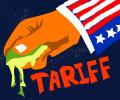
United States President Donald Trump on Friday announced that his administration will impose a 100 per cent tariff on branded and patented pharmaceutical products beginning October 1, 2025, unless the manufacturing companies are building production facilities in the US.

India's healthcare and pharmaceutical sectors raised Rs 14,811 crore through initial public offerings (IPOs) in 2024, the largest since 2019, driven by strong domestic demand amid expanding global opportunities. According to data, key contributors to the record fundraising included Sai Life Sciences (Rs 3,043 crore), IKS Health (Rs 2,498 crore), and Sagility India (Rs 2,107 crore).

'Earnings growth will be the main driver of India's market in 2026, with profits expected to rise 9% to 10% in H2 FY26 and accelerate to 12% to 15% in FY27.'
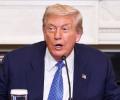
Donald Trump's tariffs, meant as political punishment, have avoided the predicted chaos, lifting US growth, weakening rivals, and letting him claim victory in a resilient global economy, observes T T Ram Mohan.

'They are a poor fit for anyone with near-term goals, low volatility tolerance, or a need for steady income or liquidity.' 'First-time investors should typically avoid them.'
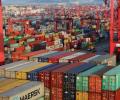
India's exports rose 9.03 per cent to $38.49 billion in April, the highest in six months, driven by healthy growth in sectors such as electronics and engineering goods, while the trade deficit widened to a five-month high of $26.42 billion. According to the commerce ministry data released on Thursday, imports increased by 19.12 per cent year-on-year to $64.91 billion in April due to a rise in shipments of crude oil and fertiliser.

Credit quality of Indian corporate is expected to be stable in the second half of the current financial year (H2FY26), supported by easing monetary cycle, and declining inflation, coupled with income-tax relief and rationalisation of the goods and service tax (GST) rates, among others.

Goods from sectors, including agriculture, precious stones, chemicals, pharma, medical devices, electricals, and machinery may get impacted if the US will go ahead with imposing reciprocal tariffs on Indian products, according to experts. They said that these sectors could face additional customs duties from the Trump administration because of the high tariff differential or gap, which is the difference between the import duties imposed by the US and India on a product.

Indian drugmakers supply 47 per cent of the generic medicine requirements in the US, and tariffs would have increased prices in the US domestic market for patients, who are already dealing with drug shortages.

The World Health Organisation (WHO) has issued an alert against three "substandard" oral cough syrups identified in India and urged national regulatory authorities worldwide to immediately notify it if these are detected in their country.

As the potential threat of a steep 200 per cent tariff on pharmaceutical imports hangs in the air, analysts and industry insiders feel that focus on exports to non-US regions as well as domestic market will increase as a long-term trend. US President Donald Trump told CNBC's Squawk Box in the first week of August that planned tariffs on import of pharmaceutical products to the US could eventually reach up to 250 per cent.

The imposition of a 100 per cent tariff by the US on imports of branded and patented pharmaceutical products starting October 1 may not significantly hurt Indian drug makers, with Sun Pharma being exposed to some headline risk but with limited earnings impact, according to analysts. Among Indian companies, only Sun Pharma has sizeable sales from patented drugs in the US (about 17 per cent of 2024-25 revenue), HSBC Global Investment Research said in a report.

Concerns over weakening demand for Indian pharmaceutical (pharma) drugs in the US - their largest export market - have weighed heavily on investor sentiment this year. While the Nifty 50 has gained 6.02 per cent year - to - date (as on September 15), the Nifty Pharma index has declined 5.18 per cent, National Stock Exchange data shows.
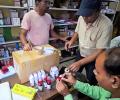
The Central Drugs Standard Control Organisation (CDSCO) will conduct testing, inspection and auditing of cough syrup manufacturers.
India's pharmaceuticals and medical devices industries are still hopeful that trade negotiations with the US could cut a fairer deal for both sides, after President Donald Trump announced a 25 per cent tariff rate on India on a social networking platform without divulging the finer details.

From labelling India the 'Tariff King' to slapping sweeping import duties, US President Donald Trump has steadily hardened his trade stance on India. These announcements are being seen as a pressure tactic to get New Delhi to agree to demands made by the US in the proposed Bilateral Trade Agreement (BTA).

After a year of modest returns, equity investors may anticipate gains of 10-15 per cent in Samvat 2082, which began on October 21. Although valuations have moderated from their peaks a year earlier, they remain above long-term averages, potentially limiting sharp upsides.

India and Russia have solidified a five-year plan to enhance their economic and trade partnership, while also addressing the ongoing conflict in Ukraine and the threat of terrorism.

India's merchandise exports dipped by about one per cent to $38.01 billion in December 2024 against $38.39 billion a year ago, according to government data released on Wednesday. Imports increased by 4.8 per cent to $59.95 billion in December 2024 compared to $57.15 billion in the year-ago month.

To shield against US President Donald Trump's tariff shock, analysts have been advising investors to focus on stocks of domestic-oriented companies, rather than export-centric ones, to minimise potential losses.

India's micro, small and medium enterprises (MSMEs) - which contribute over 45 per cent to outbound shipments - are facing a major disruption following the United States (US) decision to impose 50 per cent additional tariffs on the country's exports. MSME industry bodies have raised an alarm over the deep impact, seeking immediate government intervention.
Indian pharmaceutical firms foresee minimal disruptions in trade with Israel despite escalating regional tensions. Rising crude prices and export shipping insurance premiums have raised concerns, but the pharmaceutical sector remains optimistic. Pharmaceutical exports from India to Israel in FY 2020-21 amounted to $32.5 million, which represents only a minor segment of India's overall pharma exports.
India's merchandise exports dipped marginally in March to $41.69 billion, and by 3.11 per cent during the last fiscal year to $437.06 billion mainly due to continued geopolitical turmoil, and depressed global trade. Imports, too, declined in March as well during the entire 2023-24. Trade deficit, or the gap between imports and exports, narrowed 17.74 per cent in March to $15.6 billion and came down 9.33 per cent to $240.17 billion in FY24.

'India did not surrender. That was why he wanted to pressurise India by this 25% tariffs.'
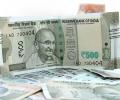
Raising overseas debt has become prohibitively expensive due to the depreciating rupee.

The crisis may not be as visible this time, but the stakes are just as high, points out Rajeswari Sengupta.
Exporters on Thursday sought a fund of Rs 750 crore for three years to tap USD 25 billion export potential in the US, aiming to seize potential opportunities that may arise as the US President-elect, Donald Trump, has threatened to impose high tariffs on Chinese goods. In its pre-Budget meeting with the finance ministry, Federation of Indian Export Organisations (FIEO) President Ashwani Kumar has also demanded extension of the five per cent Interest Equalisation Scheme (IES).

From 12:01 am eastern daylight time on August 27, 2025, higher tariffs will apply to all products of India that are either entered for consumption in the United States or withdrawn from warehouses for consumption.
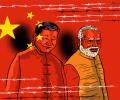
The bilateral trade between India and China has been growing at a healthy rate, but the trade gap remains sharply tilted in Beijing's favour. India has time and again flagged its concern over the ballooning trade deficit and the non-trade barriers faced by Indian goods in the Chinese market.

'Everybody in America loses because of what India is doing.'

'We have to be prepared for the larger disruption that is likely to take place.'

After reports of contamination in cough syrups sent from the country, India is considering a system to test them before exporting. It is learnt that the Central Drugs Standard Control Organisation (CDSCO) has sent a proposal to the Union health ministry on this. The idea is to test the medicines at government labs before exporting.
US President Donald Trump on Wednesday slapped an additional 25 per cent tariff on goods coming from India as penalty for New Delhi's continued buying of Russian oil.
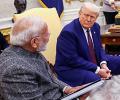
To those who ask, "Is all this really worth it? Why can't domestic demand fill the gap?", it is important to remind them that only 13 economies since the Second World War have grown at 7 per cent or more for 25 years -- like India needs to. They all had one thing in common: Strong export growth underpinned by strong global engagement, explains Sajjid Z Chinoy.

Two modules published by the NCERT, Swadeshi: Vocal for Local (for middle stage) and Swadeshi: For a Self-Reliant India (for secondary stage), carry excerpts from the prime minister's Independence Day address in which he stressed that self-reliance would drive India's journey towards a Viksit Bharat.

If India caves in to US pressure as Trump hopes it will, he will further try to blackmail it into submission, points out Ramesh Menon.
As uncertainty looms large in Afghanistan, Indian pharma exporters are apprehensive to send goods to the war-torn country and the target of exporting $126 million worth of pharmaceutical goods to the Taliban-ruling nation now depends on the future outcome. Udaya Bhaskar, director general of Pharmaceuticals Export Promotion Council of India (Pharmexcil) body under the Department of Commerce on Tuesday said as the situation is grim over there and India pharma exporters have cordial relations with Afghanistan. "The projected target for 2021-22 is $126.22 million.

The 25 per cent US tariffs, plus a penalty for Russian imports, could dent India's GDP growth by 30 basis points in the current fiscal, but the higher duty is unlikely to significantly affect India's domestic demand-driven economy, Barclays said on Thursday. If the 25 per cent tariff, announced by US President Donald Trump on Wednesday, is implemented from August 1, the effective average US import tariff on Indian goods will rise to 20.6 per cent in trade-weighted terms, as per Barclays estimates.

Gor underlined that President Trump has a "deep friendship" with Prime Minister Narendra Modi, and that is something that is unique.

'What we need to watch is how Saudi Arabia's financial assistance will be used by Pakistan. If the funds go to build their military hardware and operations, it should worry us.'
